Welcome to Divine Law College , where legal excellence meets innovation. With a legacy of shaping brilliant legal minds, we are committed to providing a transformative educational experience. Our esteemed faculty, state-of-the-art facilities, and immersive learning environment empower students to embark on a journey of knowledge, critical thinking, and ethical advocacy. Join us to unlock your potential and become a trailblazer in the dynamic field of law.
Divine Law College offers a wide range of courses to equip students with comprehensive legal knowledge and practical skills.

BA LLB
A pass in Higher Secondary Examination of the Government of Kerala or any other examination recognized as equivalent thereto by University of Kerala with not less than 45% marks for general category, 42% for OBC and 40% marks for SC and ST.

B.Com LLB
A pass in Higher Secondary Examination of the Government of Kerala or any other examination recognized as equivalent thereto by University of Kerala with not less than 45% marks for general category, 42% for OBC and 40% marks for SC and ST.

Unitary LLB
Bachelor’s degree from the University of Kerala or any other equivalent examination with not less than 45% marks in the aggregate (Part I + Part II + Part III) or CGPA 1.8 in the General Category, 42% marks in the aggregate (Part I + Part II + Part III) or CGPA 1.7 in the OBC Category and 40% marks in the aggregate (Part I + Part II + Part III) or CGPA 1.6 in the category of SC / ST.

LLM ( Criminal Law )
Eligibility Criteria: - Candidates must have an LL.B degree with a minimum of 50% aggregate marks from a recognized university. - Admission is based on the Kerala Law Entrance Exam (KLEE) conducted by the Commissioner for Entrance Examinations (CEE), Kerala .

BBA LLB
Eligibility Criteria: - Pass Class 12 from a recognized board with a minimum of 45-50% aggregate marks - No age limit - Entrance exams like CLAT, KLEE No candidate shall be admitted t the course unless he has passed the Higher Secondary Examination of the Government of Kerala or any other examination recognized as equivalent thereto by this University with not less than 45% marks for general category, 42% for OBC and 40% marks for SC and ST.

Divine Law College is the first Law College in Kerala to start Civil Service Coaching Cell within the campus
It has initiated the programme of imparting coaching for civil services examination for those students who are enrolled in this college for the five y...

Divine Law College is the first Law College in Kerala to start Judicial Service Exam Coaching Cell within the campus.
The coaching cell was inaugurated by Assistant Inspector General of Police Sri. Suneeshkumar. R, IPS. Judicial Services Exam coaching is a form of pre...

Divine Law College is the first Law College in Kerala to start Foreign Language Training Cell within the Campus.
Have started it with the aim of imparting foreign languages German and French. With a group of expert faculties and unique methodology we are able to...

Divine Law College is the first Law College in Kerala to introduce coaching for Chartered Accountancy Course inside the campus.
A chartered accountant is a qualified accountant of the Institute of Chartered Accountants of India. They are required to have sound knowledge of acco...

Divine Law College is the first Law College in Kerala to introduce coaching for Cost & Management Accounting (CMA) inside the campus
The CMA course is offered by Institute of Cost Accountants of India (ICMAI). A CMA is a person who offers to perform services involving the costing, p...

Divine Law College is the first Law College in Kerala to introduce coaching for Company Secretary Course inside the campus
A company secretary is a senior position in the corporate governance of organizations, playing a crucial role in ensuring adherence to statutory and r...
Launch Your Legal Career with Confidence: Our New Law College Ensures 100% Placement Assistance!
We provide our students with access to over 50 legal internship opportunities with prestigious law firms and organizations
Our faculty comprises 30 accomplished professors, including 10 with doctoral degrees and 15 published legal scholars.
Divine College is renowned for its exceptional faculty comprising distinguished legal experts, accomplished scholars, and experienced practitioners. The faculty's expertise and reputation attract students seeking guidance and mentorship from some of the most respected figures in the legal field..
Divine College is widely recognized for providing a transformative education that goes beyond traditional legal studies. With a focus on practical skills, interdisciplinary learning, and holistic development, the college prepares students to excel as versatile legal professionals equipped to tackle the complex challenges of the modern legal landscape.
Dive into the diverse range of academic programmes offered at Divine College, including undergraduate and postgraduate degrees in law. Explore the specialized areas of legal study, interdisciplinary approaches, and practical skills training incorporated into the curriculum. Exceptional academic programmes demonstrates.
Take a virtual tour of the college's state-of-the-art facilities, including well-equipped classrooms, modern libraries, moot courtrooms, research centers, and technology resources. Showcase how these facilities create an optimal learning environment for students. state-of-the-art facilities create a modern and conducive learning environment for sudents.
Unveiling the Legal Maze: Explore our captivating Legal Insights for a fresh perspective on the ever-evolving world of law
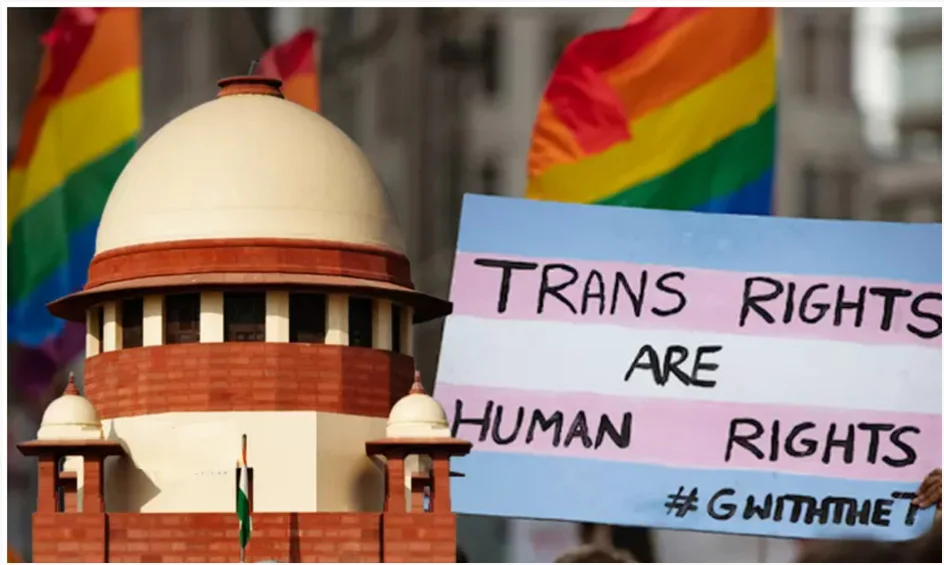
The Transgender Persons (Protection of Rights) Amendment Bill, 2026 has brought back one of the most sensitive constitutional debates in India - one that directly concerns identity, autonomy, and dignity. While transgender rights had seen progressive judicial development over the past decade, this Bill has reopened fundamental questions about the role of the State in defining personal identity. Passed by Parliament in 2026 amidst visible protests and political disagreement, the Bill significantly alters the legal framework that had been shaped by the Supreme Court and earlier legislation. It does not merely introduce procedural changes; it reshapes the underlying philosophy of transgender rights in India. At the centre of this debate lies a crucial question: can the State determine an individual’s gender identity, or is it an aspect of personal autonomy beyond state control? Recent Developments In March 2026, the Bill was passed by both Houses of Parliament - the Lok Sabha on 24 March and the Rajya Sabha on 25 March. Its passage was not smooth. It triggered widespread protests across the country, with members of the transgender community, activists, and civil society organisations raising strong objections. The opposition to the Bill is rooted in its core changes. It removes the principle of self-identification of gender, introduces a system of medical verification, and narrows the definition of who qualifies as a transgender person. Many critics have argued that these changes effectively reverse the constitutional protections recognised by the Supreme Court since 2014. There have already been calls for judicial review, and it is widely expected that the constitutionality of this law will soon be tested before the courts. NALSA Judgment To properly understand the controversy, it is essential to go back to the landmark judgment of National Legal Services Authority v. Union of India (2014). In this case, the Supreme Court took a transformative step by recognising that gender identity is self-determined. The Court held that this right is protected under multiple fundamental rights, including Article 14 (equality before law), Article 19 (freedom of expression), and Article 21 (right to life and dignity). Most importantly, the Court made it clear that legal recognition of gender identity does not require any medical or surgical intervention. This meant that an individual’s declaration of their identity was sufficient. This principle became the constitutional foundation of transgender rights in India and was later reflected, though imperfectly, in the Transgender Persons Act, 2019. Key Changes Introduced 1. Removal of Self-Identification The 2026 Amendment Bill marks a clear shift away from this self-identification model. The most significant change is the removal of the right to self-perceived gender identity. Under the new framework, a person’s identity is no longer based solely on their own declaration but must be verified through a formal process. 2. Introduction of Medical Screening Mechanism The Bill introduces mandatory state-level medical boards that evaluate individuals seeking recognition as transgender. Based on the recommendation of these boards, a District Magistrate issues a certificate of identity. This effectively creates a system where identity is no longer self-determined but state-certified. 3. Narrow Definition of Transgender Another important change is the narrowing of the definition of “transgender.” By limiting who falls within this category, the law risks excluding several gender-diverse identities that were previously recognised in a broader sense. This raises concerns about legal invisibility and the denial of welfare benefits for those who do not fit into the revised definition. 4. Penal Provisions & Welfare Measures At the same time, the Bill does introduce certain positive elements. It strengthens penalties against abuse and exploitation and criminalises practices such as forcing individuals into a particular gender identity. It also attempts to streamline welfare delivery through a more structured administrative system. However, these additions operate within a framework that many believe undermines core rights. Core Legal Issues The Bill raises serious constitutional questions, particularly in light of the principles laid down in the NALSA judgment. 1. Direct Violation of NALSA (Self-Identification) There is a direct conflict with the idea of self-identification. While the Supreme Court recognised identity as self-determined, the new law requires state certification. This creates a clear doctrinal inconsistency, and courts have already begun expressing concern about identity becoming dependent on administrative approval rather than personal autonomy. 2. Violation of Article 21 (Dignity & Autonomy) The requirement of medical verification raises issues under Article 21. Gender identity is closely linked to dignity, privacy, and bodily autonomy. Forcing individuals to undergo medical scrutiny to validate their identity may be seen as an intrusion into these protected rights. 3. Equality Violation (Article 14) The Bill raises equality concerns under Article 14. Cisgender individuals are not required to prove their gender identity before the State. However, transgender individuals must undergo a formal verification process. This differential treatment creates a classification that may be difficult to justify constitutionally. 4. Freedom of Expression (Article 19) There is also an issue under Article 19, which protects freedom of expression. Gender identity is not just a legal status; it is also a form of personal expression. When the State imposes conditions on how identity is recognised, it indirectly restricts this freedom. 5. Exclusionary Definition Finally, the narrowing of the definition of transgender identity risks excluding individuals who do not fit into rigid categories. This not only limits legal recognition but may also deny access to welfare schemes, thereby undermining the inclusive approach adopted in earlier jurisprudence.
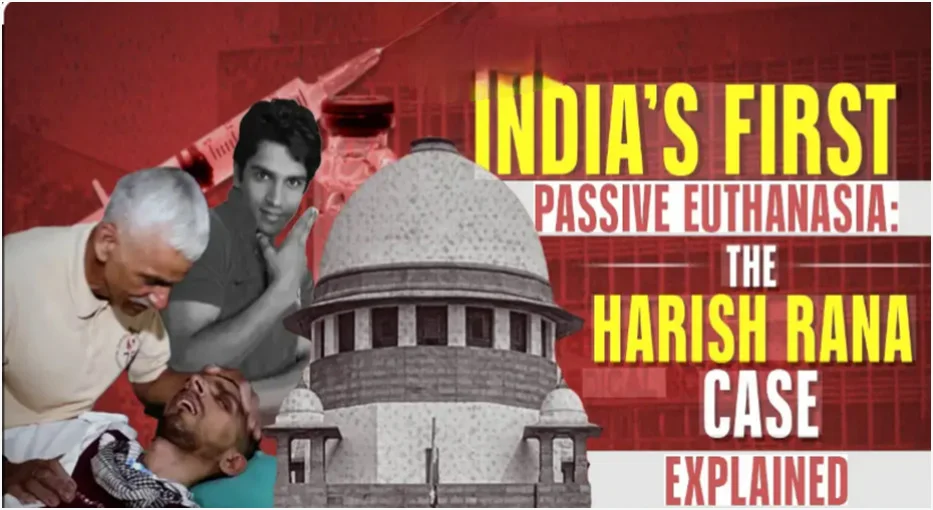
Euthanasia, commonly understood as the right to die with dignity, has emerged as one of the most important legal debates in India in 2026. For years, the issue remained largely theoretical, discussed in courtrooms and academic spaces without much real-world application. However, a landmark Supreme Court ruling in March 2026 has changed that position significantly. The discussion has now shifted from abstract constitutional principles to practical questions. Courts, doctors, and families are now dealing with real situations involving end-of-life decisions. This has brought into focus the challenges of implementing rights, the role of medical professionals, and the urgent need for a clear legislative framework. Euthanasia: Meaning and Types Euthanasia refers to the intentional ending of a person's life to relieve suffering, particularly in cases of terminal illness or irreversible medical conditions. However, the law does not treat all forms of euthanasia in the same way, and understanding this distinction is crucial. It is broadly classified into: 1. Active Euthanasia Active euthanasia involves a direct act to end life, such as administering a lethal injection. This form is illegal in India and is treated as a criminal offence, often falling under provisions relating to culpable homicide or abetment of suicide. 2. Passive Euthanasia Passive euthanasia, on the other hand, involves withdrawing or withholding life-sustaining treatment, such as ventilators or artificial feeding. In such cases, death is not actively caused but allowed to occur naturally. This form of euthanasia is legally permitted in India, but only under strict safeguards. 3. Physician-Assisted Suicide (PAS) A third category, physician-assisted suicide, involves a doctor providing the means for death while the patient performs the final act. This is not legally recognised in India. The distinction between these categories is not merely technical. Indian law draws a clear line: it permits letting die in certain circumstances, but it does not allow causing death. Pre-2026 Framework: Key Cases India does not have a comprehensive statute governing euthanasia. Instead, the law has developed through judicial decisions under Article 21 of the Constitution, which guarantees the right to life and personal liberty. The Supreme Court first addressed the issue in Gian Kaur v. State of Punjab (1996), where it held that there is no general right to die. However, the Court hinted that the right to life could include the right to die with dignity in certain contexts. This idea was developed further in Aruna Shanbaug v. Union of India (2011), where the Court permitted passive euthanasia under limited conditions. This was the first time the Court formally recognised that life support could be withdrawn in exceptional cases. The most significant development came in Common Cause v. Union of India (2018), where the Supreme Court explicitly recognised the right to die with dignity as part of Article 21. The Court also validated the concept of living wills, allowing individuals to specify their medical preferences in advance. In 2023, the Court simplified the procedure for implementing living wills and reduced procedural barriers, making the framework more accessible in practice. Harish Rana Case The turning point came in March 2026, when the Supreme Court in Harish Rana v. Union of India (2026) applied this framework in a real case involving a patient who had been in a vegetative state for over thirteen years. In this case, the Court allowed the withdrawal of life-sustaining treatment. This marked the first meaningful implementation of India's passive euthanasia framework, moving the law from theory to actual enforcement. The Court clarified that artificial nutrition and hydration are forms of medical treatment and can be withdrawn under appropriate circumstances. It emphasised that such decisions must be based on careful evaluation, including the irreversibility of the patient's condition, respect for the patient's dignity, and the opinion of medical experts through a properly constituted medical board. Living Wills in India A living will, also known as an advance directive, allows a person to decide in advance whether they want life-sustaining treatment in case they become incapable of making decisions in the future. While the Supreme Court has recognised the validity of living wills, their implementation remains weak. In 2026, adoption rates are extremely low, and there is considerable confusion about the procedure across hospitals and states. There is no uniform national registry for living wills, and many medical institutions lack clear protocols. As a result, a right that exists on paper is not easily accessible in practice. This highlights a broader issue in Indian law: recognition without institutional support often leads to ineffective enforcement. Legal Challenges in India 1. No Comprehensive Legislation - Entire framework is judge-made 2. Complex Procedures - Multiple medical boards and judicial involvement slows decisions 3. Weak Implementation - No digital registry for living wills and lack of hospital-level protocols Future of Euthanasia Law in India The Supreme Court has clearly indicated that it is time for Parliament to step in and enact a comprehensive law on euthanasia. Such a law must clearly define the distinction between active and passive euthanasia and establish safeguards to prevent misuse. It should also standardise procedures across the country and create institutional mechanisms, such as a national registry for living wills. Importantly, any legal framework must integrate euthanasia with palliative care, ensuring that patients are not choosing death simply because they lack access to adequate medical support
The introduction of the Uniform Civil Code (UCC) in Gujarat in 2026 marks a significant moment in India’s evolving personal law framework. After Uttarakhand, Gujarat has become the second state to enact a law aimed at creating uniformity in civil matters such as marriage, divorce, inheritance, and adoption. This development is not merely legislative; it raises deep constitutional questions about the relationship between equality and religious freedom, as well as the role of the State in regulating personal laws. At its core, the Gujarat UCC reflects an ongoing shift toward state-led legal uniformity, where individual rights and social reform are increasingly being balanced against India’s long-standing tradition of legal pluralism. What is Uniform Civil Code? The concept of a Uniform Civil Code originates from Article 44 of the Constitution, which directs the State to endeavour to secure a common civil law for all citizens. Unlike fundamental rights, this provision is part of the Directive Principles of State Policy and is therefore not directly enforceable in courts. The central idea behind the UCC is to replace religion-based personal laws with a common legal framework applicable to all individuals, regardless of their faith. At present, India follows a plural system in which different communities are governed by their own personal laws. For instance, marriage, divorce, and succession are regulated differently for Hindus, Muslims, Christians, and Parsis. A Uniform Civil Code seeks to standardise these areas of law so that similar situations are governed by the same legal principles. In theory, this promotes equality and removes inconsistencies. In practice, however, it raises concerns about cultural diversity and religious autonomy. Key Features 1. Uniform Law Across Communities The Gujarat UCC introduces a common set of rules governing personal matters across communities. It applies irrespective of religion and covers core areas such as marriage, divorce, succession, and adoption. This represents a significant departure from the existing system, where these issues are governed by religion-specific laws. 2. Ban on Polygamy One of the most notable changes is the introduction of monogamy as a universal rule. Under the new framework, a valid marriage requires that neither party has a living spouse at the time of marriage. This effectively eliminates polygamy across all communities. 3. Regulation of Live-in Relationships The law also brings live-in relationships within a formal legal structure. It requires such relationships to be registered and provides legal recognition to them, particularly with respect to rights and protections for women. This reflects an attempt to align the law with changing social realities. 4. Uniform Inheritance Rules Another major feature is the introduction of uniform inheritance rules. The law standardises succession by categorising heirs - such as spouses, children, and parents - and applying the same principles regardless of religion. This aims to eliminate disparities that exist under different personal laws. 5. Exemption for Scheduled Tribes At the same time, the law provides an exemption for Scheduled Tribes, recognising the constitutional protection given to tribal customs and traditions. While this exemption acknowledges cultural diversity, it also raises questions about the completeness of “uniformity” under the law. What is the Objective Behind Gujarat UCC? The State justifies UCC on three major grounds: 1. Gender Justice - One of the primary objectives is to promote gender justice by eliminating discriminatory practices that exist in certain personal laws, particularly in areas such as marriage and inheritance. 2. Legal Uniformity - Another objective is to achieve legal uniformity. By replacing multiple personal laws with a single framework, the State aims to reduce complexity and ensure consistency in legal outcomes. 3. Secular Governance - The third objective is to reinforce the idea of secular governance, where laws are based on citizenship rather than religious identity. According to the drafting committee, the goal is to create an equality-based legal system that treats all individuals uniformly. Constitutional Debate: Directive Principle vs Fundamental Rights The Gujarat UCC brings into sharp focus a long-standing constitutional tension. On one hand, Article 44 encourages the State to implement a Uniform Civil Code. On the other hand, Articles 25 to 28 guarantee individuals the right to freely practise and manage their religion. This creates a fundamental question: can a Directive Principle justify limiting a Fundamental Right? The Supreme Court has addressed this issue in several cases. In decisions such as Mohd. Ahmed Khan v. Shah Bano Begum and Sarla Mudgal v. Union of India, the Court has supported the idea of a Uniform Civil Code in principle, particularly in the interest of gender justice. However, it has never made UCC mandatory or held that it can override fundamental rights. This means that while the Constitution envisions a UCC, its implementation must still respect the basic structure of rights, including religious freedom.